Table Of Content

The delegates and resident commissioner possess the same powers as other members of the House, except that they may not vote when the House is meeting as the House of Representatives. Echoing one of the many grievances shared by hard-right Republicans who opposed all of the aid measures, Mr. Good said his support for “Israel’s right to defend itself remains unshakeable” but that he disagreed with a measure that would add to the nation’s debt. Usually, these committees will make recommended changes to these pieces of legislation, before voting on whether or not to forward them to the entire House of Representatives or Senate for a vote.
House Speaker Mike Johnson is negotiating with White House to advance Ukraine aid
After the Democratic caucus chair is the campaign committee chair (Democratic Congressional Campaign Committee), then the co-chairs of the Steering Committee. For the Republicans it is the chair of the House Republican Policy Committee, followed by the campaign committee chairman (styled as the National Republican Congressional Committee). The party with a majority of seats in the House is known as the majority party.
How Every Member Voted
According to original analysis by Ballotpedia, only 26 congressional districts were predicted to be competitive in 2014. The Constitution empowers the House of Representatives to impeach federal officials for "Treason, Bribery, or other high Crimes and Misdemeanors" and empowers the Senate to try such impeachments. The House may approve "articles of impeachment" by a simple majority vote; however, a two-thirds vote is required for conviction in the Senate.
Democrats weigh prospect of helping Johnson save his job as House speaker
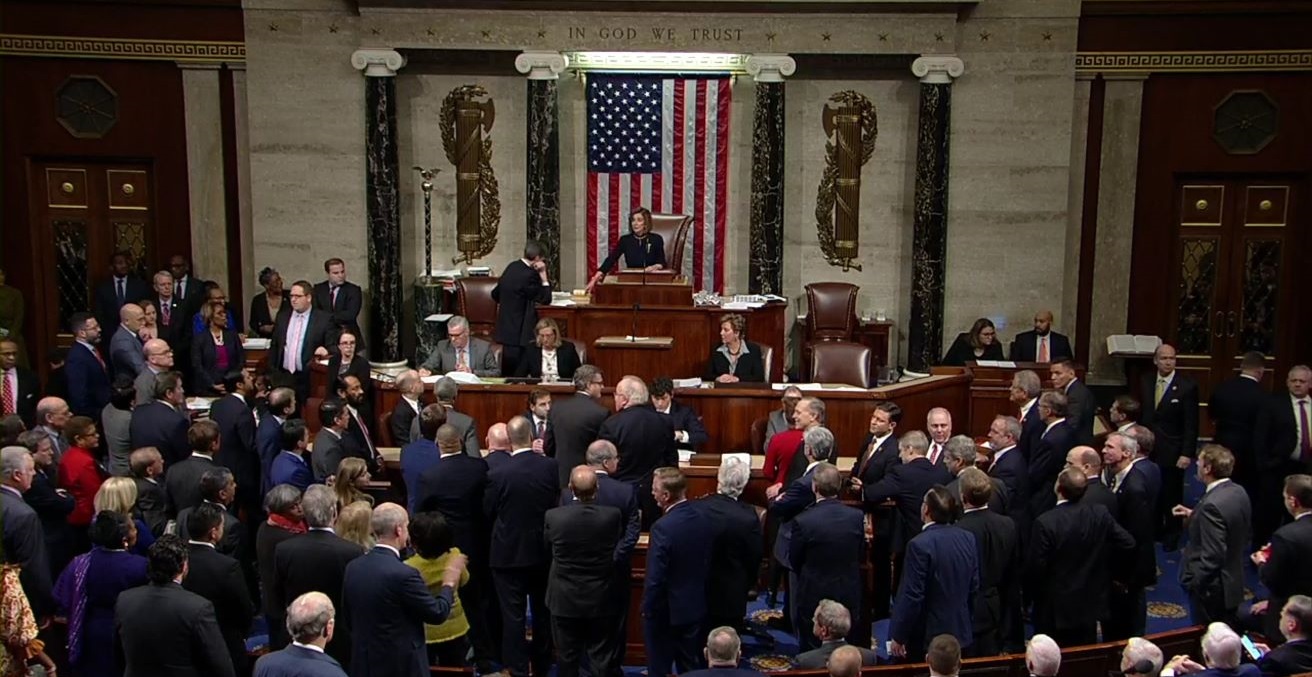
House passes Ukraine, Israel aid bills after long struggle - The Associated Press
House passes Ukraine, Israel aid bills after long struggle.
Posted: Sun, 21 Apr 2024 07:00:00 GMT [source]
Each of the two political parties also elect a “Whip”—the Majority Whip for the party with the most seats, and the Minority Whip for the other party—from their House delegations. The whip’s official role is to count potential votes for bills being debated for the party leaders. The states of Washington and California use a similar (though not identical) system to that used by Louisiana.
House Speaker Mike Johnson says he will push for aid to Israel and Ukraine this week
For that situation the House minority leader can play the role of a de facto "leader of the opposition", often more so than the Senate minority leader, due to the more partisan nature of the House and the greater role of leadership. After the whips, the next ranking official in the House party's leadership is the party conference chair (styled as the Republican conference chair and Democratic caucus chair). The speaker is the presiding officer of the House but does not preside over every debate. Instead, they delegate the responsibility of presiding to other members in most cases.
Member officials
The majority party members and the minority party members meet in separate caucuses to select their leader. Third parties rarely have had enough members to elect their own leadership, and independents will generally join one of the larger party organizations to receive committee assignments. The House is one of Congress’s two chambers (the other is the U.S. Senate), and part of the federal government’s legislative branch. The committees also play an important role in the control exercised by Congress over governmental agencies.
Checks and Balances in Congress
Office of the Clerk, U.S. House of Representatives - Vote Details - House.gov
Office of the Clerk, U.S. House of Representatives - Vote Details.
Posted: Tue, 05 Dec 2023 08:00:00 GMT [source]
A general rule of thumb is that each member of the House of Representatives represents roughly 600,000 people. If you are having problems contacting your representative, you can report the problem using the Contact Webmaster form, write or call your elected representative, or visit the member's website for alternate contact information. When the presidency and Senate are controlled by a different party from the one controlling the House, the speaker can become the de facto "leader of the opposition".

The Constitution vests certain exclusive powers in the House of Representatives, including the right to initiate impeachment proceedings and to originate revenue bills. The organization and character of the House of Representatives have evolved under the influence of political parties, which provide a means of controlling proceedings and mobilizing the necessary majorities. Party leaders, such as the speaker of the House and the majority and minority leaders, play a central role in the operations of the institution. From 1910 to 1975 committee and subcommittee chairmanship was determined purely by seniority; members of Congress sometimes had to wait 30 years to get one, but their chairship was independent of party leadership. The rules were changed in 1975 to permit party caucuses to elect chairs, shifting power upward to the party leaders.
It moved to Philadelphia in 1790 and then to Washington, DC, in 1800. Learn more about the history of the majority and minority leaders from the Office of the Clerk. While all Democrats voted in favor of aid to Ukraine and all but Ms. Tlaib supported funding to Taiwan, 37 left-leaning Democrats defected to vote against the Israel aid bill.
Each state is entitled to at least one representative, however small its population. One example of a provision repeatedly supported by the House but blocked by the Senate was the Wilmot Proviso, which sought to ban slavery in the land gained during the Mexican–American War. Conflict over slavery and other issues persisted until the Civil War (1861–1865), which began soon after several southern states attempted to secede from the Union. The war culminated in the South's defeat and in the abolition of slavery. All southern senators except Andrew Johnson resigned their seats at the beginning of the war, and therefore the Senate did not hold the balance of power between North and South during the war. During the first half of the 19th century, the House was frequently in conflict with the Senate over regionally divisive issues, including slavery.
Work can continue into the evening with receptions or fundraising events. Before members are assigned to committees, each committee’s size and the proportion of Republicans to Democrats must be decided by the party leaders. The total number of committee slots allotted to each party is approximately the same as the ratio between majority party and minority party members in the full chamber.
The Committee meets in the House chamber; it may consider and amend bills, but may not grant them final passage. Generally, the debate procedures of the Committee of the Whole are more flexible than those of the House itself. One advantage of the Committee of the Whole is its ability to include otherwise non-voting members of Congress. Representatives and delegates serve for two-year terms, while a resident commissioner (a kind of delegate) serves for four years.


No comments:
Post a Comment